This is a continued article from CakePHP 3 the Way to Reach Controller Invoking part 1 of 3.
index.php remains the following 5 lines.
This is a continued article from CakePHP 3 the Way to Reach Controller Invoking part 1 of 3.
index.php remains the following 5 lines.
I researched executed process in CakePHP 3, by controller execution. It was really complicated than I expected, so I omitted some explanation, and I guess it is somehow difficult to read this article, sorry.
Continue reading CakePHP 3 the Way to Reach Controller Invoking part 1 of 3、お盆の時期に愛知旅行に行きました。 その際熱田神宮へも行きました。
地下鉄名城線なら神宮西、伝馬町、名鉄名古屋本線なら神宮前、JR東海道本線なら熱田から歩いて行けます。 今回は 地下鉄名城線 神宮西 から行きました。
一日過ごしてもいいと思えるくらいのとてもいい環境です。 広さも19万平方メートルと広大で(東京ドーム約4個分)、社の数も多くてすごいですが、なんといっても空気がきれいで離れたくなくなる神社です。 森林の中にいる気分になれます。
ご祭神は熱田大神で、三種の神器の一つである草薙神剣が祭られたのが起源です。 本宮のほか別社、摂社、末社をあわせるとなんと45社にもなります。
また 6月5日に行われる熱田まつりは熱田神宮最大のお祭りで、他に初詣、初えびす、花の撓が特に参拝者の多いお祭りです。 神事、祭典あわせて約70もの行事が行われていますのでお出かけ前に是非チェックしてみてください。 熱田神宮のウェブサイトに詳しく載っています。
名城線神宮西から南へ歩き、西門から入りました。 山の中に入るような感じすらあります。
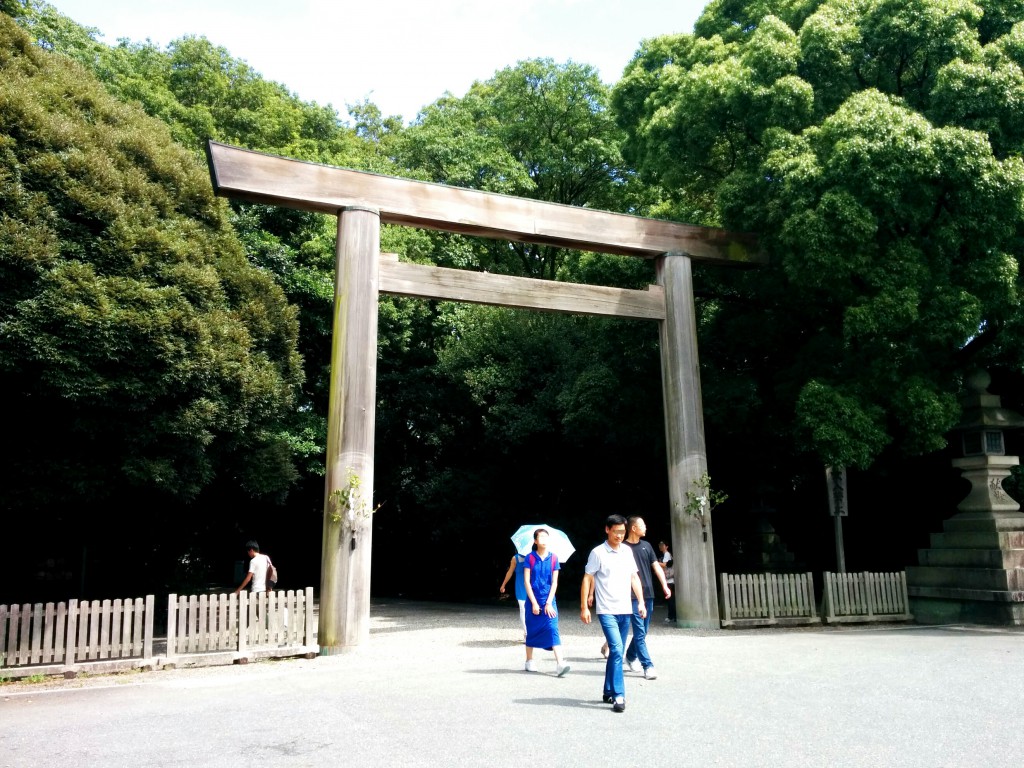
お盆前の時期でしたから、蝉も元気に鳴いていました。 木でできた西門が素敵ですね。
参道は木々に囲まれて清々しい空気が流れています。
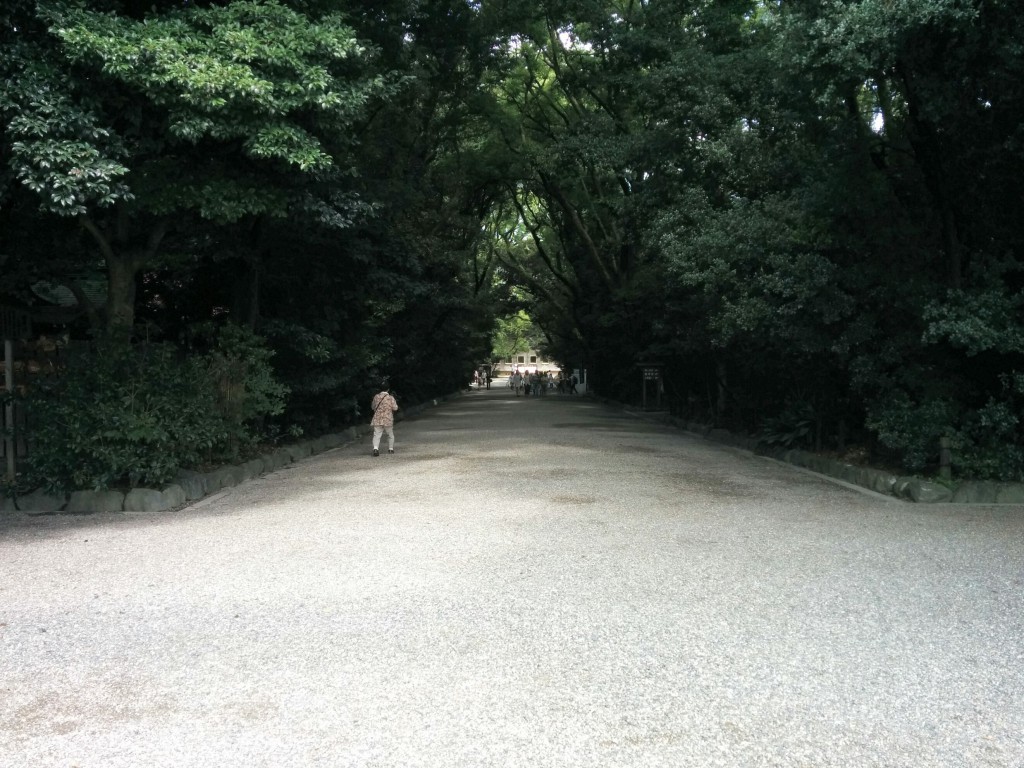
神社を囲む緑の中に、図書室を備えた宝物館があり、展示室では保管されている宝物を順次展示しています。 国宝、重要文化財、県指定文化財に指定された宝物は170を超えており、一見の価値があります。
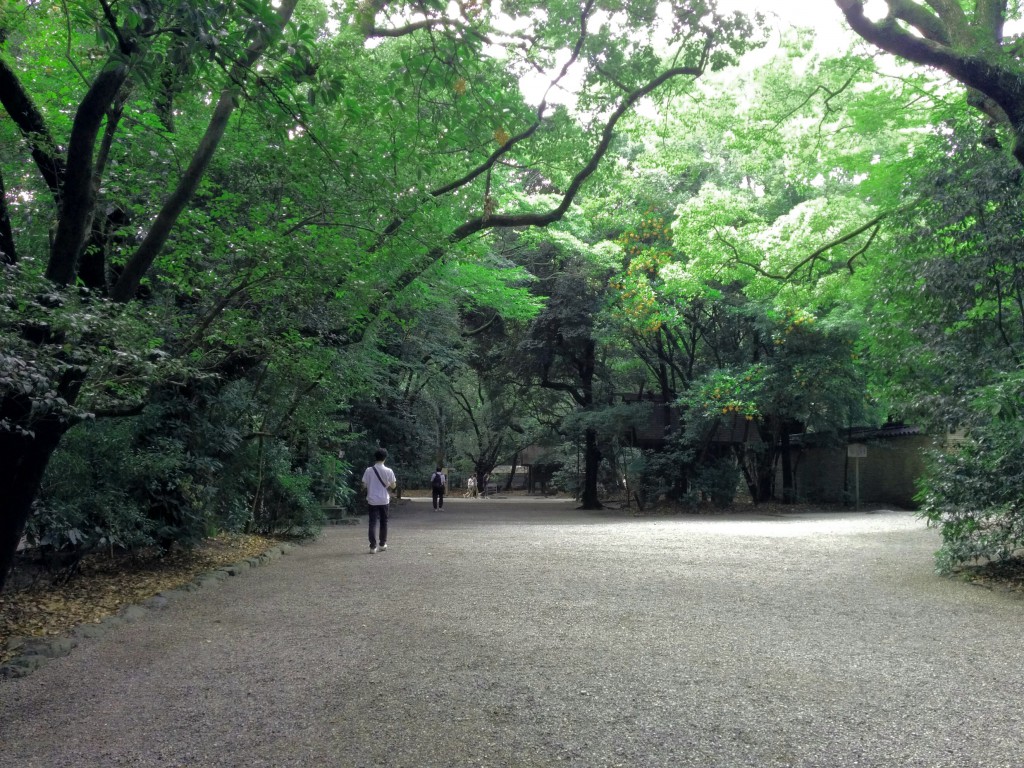
熱田神宮は、かの織田信長も必勝祈願に訪れていたそうです。 そして、桶狭間の戦いに勝った信長は信長塀を奉納しました。 その信長塀を抜けると神楽坂です。
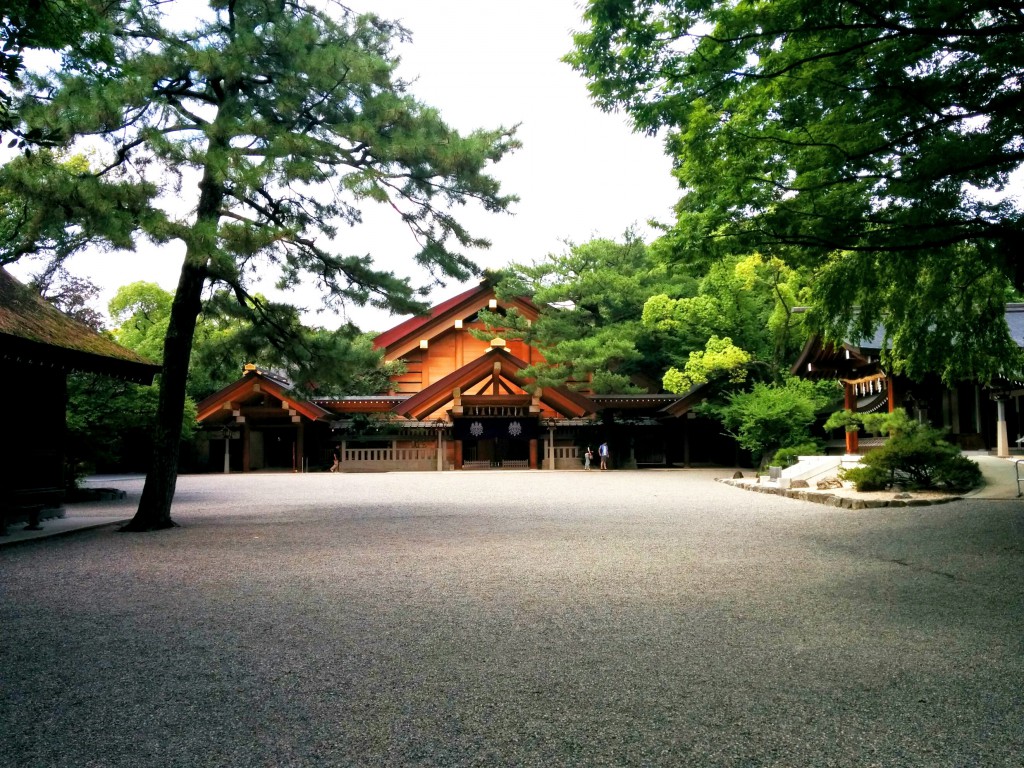
安産や厄払いなどのご祈祷を受けることができます。 神楽殿の左に本宮があり、向かいにはならずの梅があります。
花が咲くけれども実がならない不思議な梅の木で、 室町時代からずっと熱田神宮に立っています。
本宮と神楽殿の間には授与所があり、お守りを授かることができます。 1900年の記念事業で新しく造営された建物で、神楽殿でのご祈祷申込も受け付けています。 こちらでひとつ仕事守を授かりました。
境内の奥にある清水社は願い事をかなえてくれるそうです。 水の神である罔象野上をお祭りしています。 古事記にも日本書紀にも出てくる由緒正しい神様です。
そして清水社の後ろには湧き水があり、肌につけるときれいになり、中央にある石に3度水をかけて祈念すると願い事が叶うといわれています。
もしお食事時に行くのなら、ひつまぶしが登録商標のあつた蓬莱軒、ぜひ予約して行ってきてください。
I read what the CakePHP 3 built-in server is, which is start with php bin/cake.php server.
On polyhedron, there’s Descartes Theorem besides Euler’s Formula.
Polyhedron is rounded by faces, whatever faces’ figure is. It means there’s a theorem. Now, let’s investigate regular polyhedrons.
About regular polyhedron, the summation of internal angle that gathers one vertex must be less than 360 degrees. If it equals to 360 degrees, vertex doesn’t exist.
Calculate about regular tetrahedron.
A face of it is regular triangle and one of its angles is 60 degrees. At 1 vertex of tetrahedron, 3 faces gather, so summation of angle degrees gathering at one vertex is
\[ 60 times 3 = 180 . \]Difference from space, 360 degree, is
\[ 360 – 180 = 180 . \]The number of tetrahedron vertexes is 4, so sum of angle deficit for all faces are
\[ 180 times 4 = 720 . \]I calculated such angle deficit for all regular polyhedron. The result is below.
| Sum of internal angle on one vertex | Difference from 360 degrees (angle deficit) | Sum of angle deficit for all faces | |
|---|---|---|---|
| regular tetrahedron | 180 degrees | 180 degrees | 720 degrees |
| regular hexahedron | 270 degrees | 90 degrees | 720 degrees |
| regular octahedron | 240 degrees | 120 degrees | 720 degrees |
| regular dodecahedron | 324 degrees | 36 degrees | 720 degrees |
| regular icosahedron | 300 degrees | 60 degrees | 720 degrees |
See, the summation of angle deficit over the polyhedron is 720 degree.
Actually, it is true to every polyhedron. This theorem called Descartes theorem.
Now, let’s prove it.
Write vertex number, edge number and face number of a polyhedron as \( V \) , \( E \) , \( F \) . As I wrote on Think about Euler’s Formula, the following equation is true (Euler’s Formula).
\[ V – E + F = 2 \]Now, calculate summation of angle deficit. It is explained as ( 360 degree ) × ( vertex count ) – ( sum of internal angle for all faces ).
\[ (360 \textrm{degree} ) \times ( \textrm{vertex count} ) = 360 \times V \]is clear from definition of \( V \) .
Calculate summation of internal angle for each face.
Write edge number of a face as \( e \) . The summation of internal angle on this face is
\[ (e – 2) \times 180 . \]Calculate summation of the above value for all faces.
With \( e \), it is written as the following.
\begin{eqnarray} & & \sum \left\{ (e – 2) times 180 \right\} & = & 180 ( \sum e – \sum 2 ) \end{eqnarray}\( \sum \) means summation.
\( \sum e \) is the summation of edge count for all faces. It means count twice for each edge, so \( \sum e = 2 E \) . Calculate summation for each face, then \( \sum 2 = 2 F \) .
Now, the value we want to know is
\begin{eqnarray} & & 180 ( sum e – sum 2 ) & = & 180 ( 2 E – 2 times F ) \\ & = & 360 ( E – F ) . \end{eqnarray}Then, the sum of angle deficit over polyhedron is
\begin{eqnarray} & & 360 V – \left\{ 360 ( E – F ) \right\} & = & 360 ( V – E + F) \\ & = & 360 \times 2 \\ & = & 720 . \end{eqnarray}